Publishing Without Barriers: Copyright, Open Access, and Your Rights
When you publish your research or write a science feature for us, you might wonder who actually owns your work. The short answer is simple: you do.
Traditional academic journals often ask authors to hand over their copyright. We believe young researchers deserve full credit and complete ownership of their intellectual work. That is why we operate under an Open Access model using a Creative Commons (CC BY 4.0) license.
Understanding Creative Commons: Why We Choose CC BY 4.0
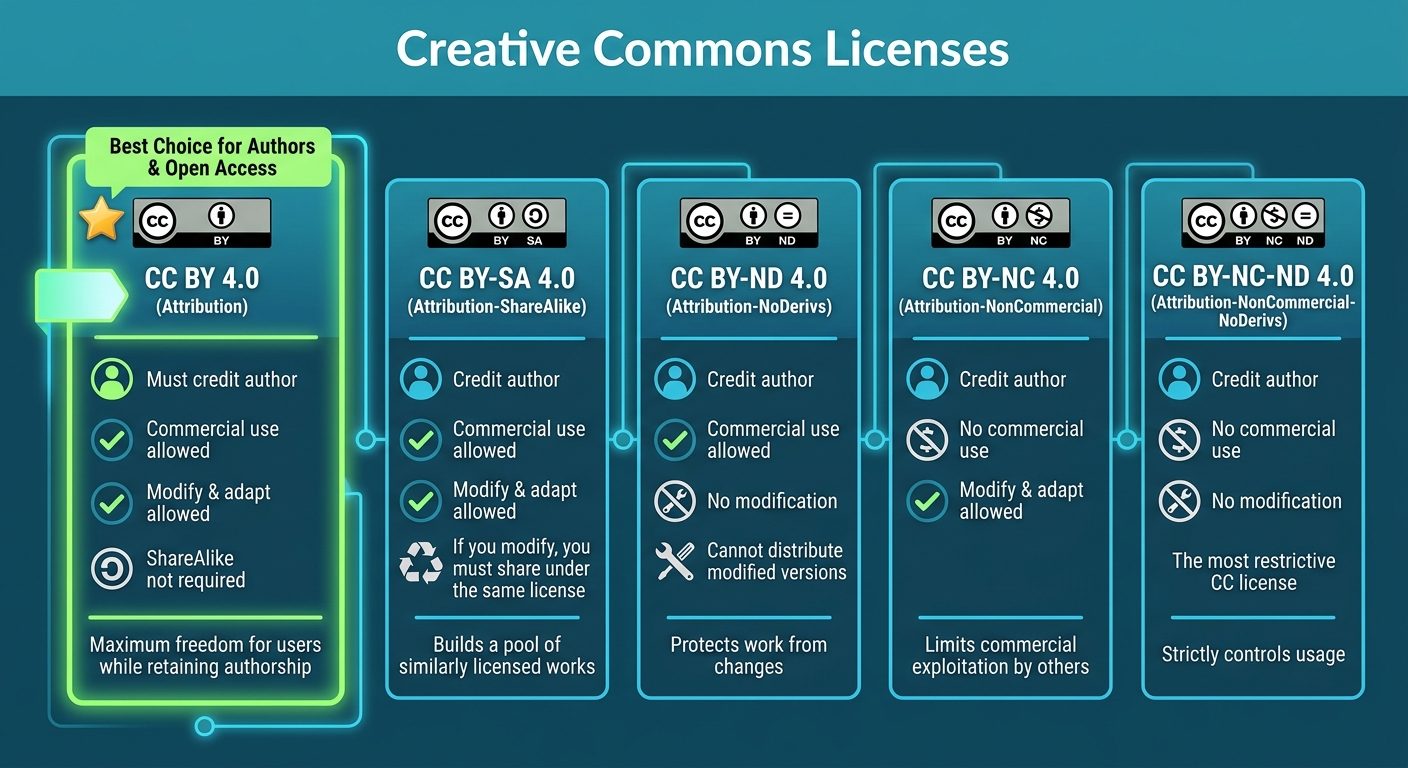
Navigating academic publishing rights can feel overwhelming, but Creative Commons licenses make it simple. Here is how different CC licenses work and why CC BY 4.0 offers the maximum advantage for student authors:
- CC BY 4.0 (Attribution) — Our Standard (Best Choice):
- How it works: Anyone can share, adapt, and build upon your research for any purpose, provided they give full credit to you as the original author.
- Why it wins: It gives your work the highest possible reach, global citations, and visibility for university admissions (Common App / UCAS) without locking your IP behind paywalls or restrictive clauses.
- CC BY-SA (ShareAlike): Requires any new work based on yours to be licensed under the exact same terms.
- CC BY-NC (NonCommercial): Prevents others from using your work for commercial purposes without additional permission.
- CC BY-ND (NoDerivatives): Allows sharing but prohibits any re-editing, translating, or building upon your paper.
- CC BY-NC-ND: The most restrictive license, limiting all commercial use and modifications.
What does this mean for you as a student author?
- You Keep Full Ownership: You retain the copyright to your paper, article, or essay at all times. We simply receive a non-exclusive license to publish and share your work on our platform.
- Maximum Impact and Visibility: Anyone in the world can read, download, and share your article for free. Future admissions officers, university professors, or peers can access your work without paywalls.
- Freedom to Reuse Your Work: You can easily link your article in your Common App, UCAS personal statements, personal portfolio, or future academic research without asking us for permission.
- Proper Attribution: Anyone who uses, references, or quotes your work must give you full credit as the original author.
A Note for Student Authors Under 18:
Because you are building your academic portfolio early, we handle legal agreements through a simple adult confirmation process during submission. Your parent, guardian, or faculty mentor confirms the submission on your behalf, so your rights remain fully protected while your voice reaches a global audience.